Get a Free Quote
Live RatesTrusted by Industry Leaders
Vehicle Transportation Services USA
Vehicle transportation services provide individuals, businesses, and dealerships with the ability to relocate cars, trucks, SUVs, and specialty vehicles across short and long distances. Rather than driving a vehicle hundreds or thousands of miles, professional transport carriers load it onto a specialized trailer and deliver it to a designated location. This process is managed through coordinated logistics that account for route selection, carrier availability, pickup scheduling, and delivery timelines. Vehicle transportation is used during household relocations, online vehicle purchases, dealer transfers, corporate moves, seasonal snowbird migrations, and military PCS orders.
Vehicle transportation services are different from towing or freight shipping. They involve scheduled logistics coordination for relocating vehicles between locations.

Car Carrier Highway Transport
Dealership Vehicle Loading
Fleet Vehicle Shipment
What Vehicle Transportation Services Include

Vehicle Shipping Workflow Concept
Vehicle Pickup
Carrier Transport
Delivery Verification
At its broadest level, the vehicle transportation services industry encompasses everything involved in moving a vehicle from a pickup location to a delivery location without the owner driving it. That includes the initial quoting and scheduling process, carrier assignment based on route and vehicle type, the physical transport itself, and final delivery confirmation at the destination.
The scope is wider than most people realize. Vehicle transport coordination covers private consumers relocating a personal car during a move, dealerships distributing inventory across regions, corporations managing fleet logistics, online car buyers receiving purchases from out-of-state sellers, and collectors shipping high-value or classic automobiles that demand extra care. Automotive logistics at this level requires careful planning, route optimization, and consistent communication between the customer, the dispatch team, and the carrier.
Brightway Logistics handles vehicle shipping coordination across all of these scenarios. Whether someone needs a single vehicle shipped to a new home or requires ongoing logistics operations for commercial inventory, the underlying process follows the same professional framework — built around transparency, carrier verification, and reliable scheduling.
Vehicle transportation services are not:
- • Towing services
- • Freight cargo shipping
- • Household moving services
Auto Transport and Car Shipping Options
Two terms dominate this industry, and understanding the relationship between them helps customers make better decisions. Auto transport generally refers to the broader service category — the physical movement of vehicles using specialized carriers such as open or enclosed trailers. Car shipping is often used interchangeably in everyday language, though it tends to describe the consumer-facing experience of arranging for a specific vehicle to be picked up and delivered.
In practice, both terms describe the same core service. The distinction matters more for understanding what a provider actually does behind the scenes. A well-run operation combines customer-facing car shipping simplicity with the backend rigor of professional auto transport logistics.
Brightway Logistics organizes its services around three interconnected pillars:

Auto Transport
The foundation of what we do. Auto transport covers the carrier coordination, route planning, and scheduling required to physically move vehicles between locations. This includes everything from single-car shipments to high-volume dealer transfers.
Explore Auto Transport
Car Shipping
Car shipping represents the customer experience layer — requesting a quote, choosing a transport method, providing vehicle details, and tracking the shipment from origin to destination. Brightway manages this process end to end so customers always know where their vehicle stands.
Learn About Car Shipping
Logistics Operations
Behind every successful shipment is a logistics operation that most customers never see. Dispatch coordination, carrier vetting, shipment scheduling, route density analysis, and delivery confirmation all happen in the background.
How Logistics WorksVehicle Transport Service Methods
Not every vehicle shipment has the same requirements. A daily commuter car being relocated during a move has very different needs than a limited-production sports car heading to a concours event. Brightway Logistics offers multiple vehicle transport methods so that every shipment is matched to the right level of service.

Open Auto Transport
The most common and cost-effective car transport method available. Vehicles are loaded onto open multi-car carriers — the same type of trailers you see on highways carrying new cars from factories to dealerships. Open transport works well for standard vehicles in running condition and represents the majority of consumer shipments nationwide.

Enclosed Auto Transport
Designed for vehicles that require protection from weather, road debris, and visibility during transit. Enclosed carriers fully shield the vehicle inside a covered trailer. This method is frequently chosen for luxury vehicles, classics, exotics, and any automobile where cosmetic condition is a top priority.

Expedited Auto Transport
When timing matters more than cost, expedited transport compresses the standard scheduling window. Carrier assignment is prioritized, and pickup is arranged within a shortened timeframe. This option suits customers facing tight relocation deadlines, last-minute purchases, or time-sensitive dealer transfers.

Door-to-Door Auto Transport
The carrier picks up the vehicle as close to the customer's specified address as safely possible and delivers it the same way at the destination. Door-to-door service eliminates the need to drop off or retrieve a vehicle from a separate facility, making it the most convenient option for most customers.

Terminal-to-Terminal Vehicle Transport
An alternative for customers who prefer to drop off and pick up their vehicle at designated terminal locations. This method can sometimes offer scheduling flexibility or cost advantages depending on the route and region.

Multi-Vehicle Logistics
For customers shipping more than one vehicle — whether that means a household with two cars or a dealership moving a dozen units — multi-vehicle coordination consolidates shipments for efficiency. Scheduling, carrier assignment, and delivery windows are managed as a single coordinated operation. Each of these transport service options is covered in greater detail on its respective service page, where you can explore specifics around timing, suitability, and what to expect. [View all vehicle transport methods.
How Vehicle Transport Works
The concept behind vehicle shipping coordination is straightforward, even though the execution requires real expertise. At its core, the process connects a person who needs a vehicle moved with a qualified carrier who has the equipment and the route availability to move it.
It begins when a customer provides the essential shipment details — the vehicle type, the pickup location, the delivery location, and any preferences around transport method or scheduling. From there, the logistics team evaluates the shipment against current carrier availability, route density, and timing. A carrier is assigned based on alignment between the shipment's requirements and the carrier's capacity, equipment, and trajectory.
Once a carrier is matched and the shipment schedule is confirmed, the vehicle is inspected at pickup, loaded onto the transport trailer, and moved to its destination. Upon arrival, a second inspection occurs at delivery to document the vehicle's condition. Delivery confirmation closes out the shipment.
What makes vehicle transport coordination genuinely complex is not any single step — it is managing the variables that shift constantly. Weather patterns, seasonal demand, route congestion, carrier schedules, and vehicle specifications all influence how a shipment unfolds. Brightway Logistics manages these moving parts so customers experience the process as simple and predictable, even when the logistics behind it are anything but.

Shipment Request and Scheduling
User submits shipment details.
Carrier Assignment and Dispatch Coordination
Transport carriers are matched with the shipment route.
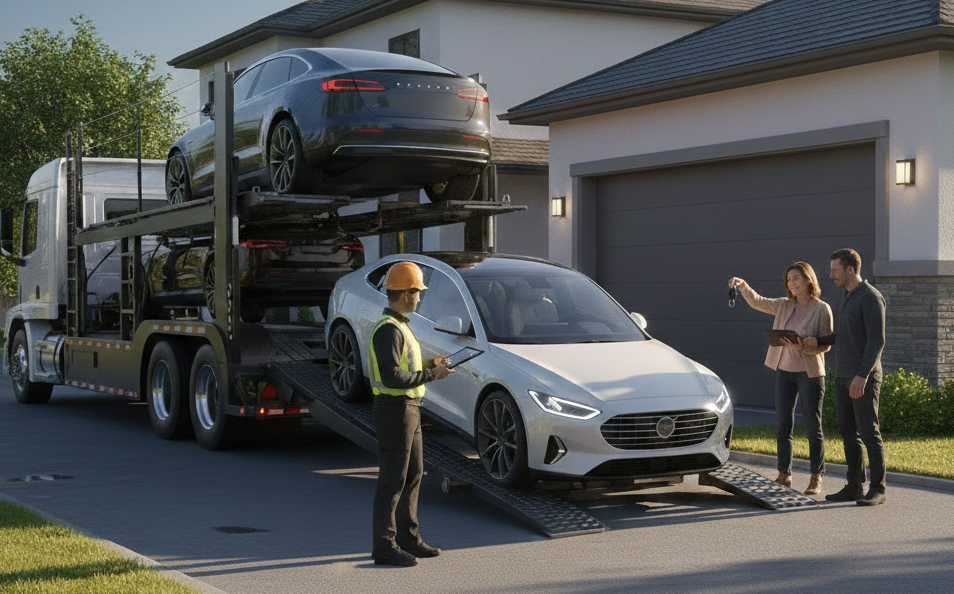

Vehicle Pickup and Transport
Vehicles are loaded onto transport carriers.
Delivery Confirmation
Vehicles arrive at destination and delivery is verified.

Compliance, Documentation, and Shipment Verification
-
`
Carrier Verification
Trust in vehicle transportation services is built on verifiable standards, not promises. Every carrier operating within Brightway's network undergoes a carrier verification process that includes confirmation of federal operating authority, active insurance coverage, safety ratings, and transport compliance history. We do not assign vehicles to carriers who fall short of these benchmarks.
-
`
Shipment Documentation
Vehicle shipment documentation plays a central role in protecting both the customer and the carrier. A Bill of Lading is generated for every shipment, recording the vehicle's condition at pickup and again at delivery. This document serves as the official record of the transport and is essential for resolving any disputes that may arise.
-
Insurance Coverage
Insurance coverage is another area where clarity matters. Every shipment coordinated through Brightway is covered by the carrier's cargo insurance policy, which is verified before dispatch. Customers who want supplemental coverage for high-value vehicles can discuss additional options during the quoting process.
-
Delivery Inspection Records
Transport compliance is not a marketing talking point for us — it is an operational requirement. Brightway Logistics maintains these standards because vehicle shipping only works when every party in the chain operates with accountability and proper documentation. Read more about our transport compliance standards.

Licensed Carrier Network
All carriers are fully verified and licensed for safe transport.

Transport Documentation
Every shipment comes with complete documentation for transparency.

Vehicle Insurance Coverage
All vehicles are insured during transit for full protection.

Delivery Verification
Verified delivery records ensure accurate and secure vehicle drop-off.
Pricing and Cost Factors
Vehicle shipping pricing is not a fixed-rate service. The cost of any individual shipment depends on a combination of factors that are unique to that particular move, which is why blanket price lists rarely reflect what a customer will actually pay.

Distance and Route Density
Transport routes influence vehicle shipping costs, including distance, traffic, and route complexity. Route density deserves specific mention because it is the cost driver most customers overlook. Routes with heavy carrier traffic — such as corridors between the Northeast and Florida or between California and Texas — tend to offer more competitive pricing simply because carriers are already traveling those lanes. Shipments to or from less-trafficked areas may require additional scheduling flexibility or modest cost adjustments to attract a carrier to that route.

Vehicle Type and Size
Vehicle dimensions, type, and operability affect the transport configuration and overall shipping cost. A compact car shipped on an open carrier along a high-traffic corridor between major metro areas will cost less than an oversized SUV shipped in an enclosed trailer across a low-demand rural route — not because the service quality differs, but because the logistics economics are fundamentally different.

Transport Method Selection
Different service methods, such as open, enclosed, or expedited transport, impact scheduling and pricing. Seasonality also plays a role. Demand for vehicle transport peaks during summer months and during the early-year snowbird migration season, which can influence both pricing and pickup timelines. Brightway Logistics provides individualized quotes based on the actual details of each shipment. There are no hidden fees, and the factors driving the price are explained clearly during the quoting process. Understand what affects vehicle shipping pricing.

Nationwide Vehicle Transport Coverage
Vehicle transportation services are coordinated across the United States through carrier networks connecting major metropolitan regions and transport routes.
Brightway Logistics coordinates vehicle transportation services across the continental United States. Whether a shipment runs coast to coast, crosses a few state lines, or moves within a single region, our carrier network and dispatch infrastructure support transport routes of virtually any distance.
Nationwide vehicle transport requires more than just a list of destinations — it demands an understanding of regional logistics patterns. Carrier availability, route frequency, and seasonal traffic flows all vary by geography. Our dispatch team accounts for these patterns when scheduling pickups and estimating delivery windows, which is why we can offer realistic timelines rather than vague promises.
Regional vehicle shipping coverage also means understanding the practical realities of different areas. Urban pickups and deliveries come with considerations around street access and parking restrictions. Rural locations may require coordination around carrier routing and road accessibility. Brightway handles these details as part of standard shipment coordination because getting them right is what determines whether a delivery arrives smoothly or hits avoidable delays.
Why Choose Brightway Logistics
Reliable, nationwide vehicle transport services with verified carriers, seamless coordination, and dedicated shipment support.
Licensed Transport Coordination
All vehicle transport is coordinated with fully licensed and verified carriers for safety and compliance.
Carrier Network Management
Our nationwide carrier network ensures timely vehicle pickup, transport, and delivery verification.
Nationwide Shipping Coverage
Brightway Logistics operates across all major US regions to provide comprehensive vehicle transport coverage.
Shipment Support
Our dedicated team provides end-to-end support for every vehicle shipment, from pickup to delivery verification.
Get a Quote for Vehicle Transportation Services
Requesting a quote from Brightway Logistics is the starting point for every shipment. The process is designed to be fast, transparent, and free of obligation.
Request your free vehicle transport quote today.
No credit card required • Instant results